 Request call back

 Categories
Private Label and OEM
 By:Admin
 07 February, 2026
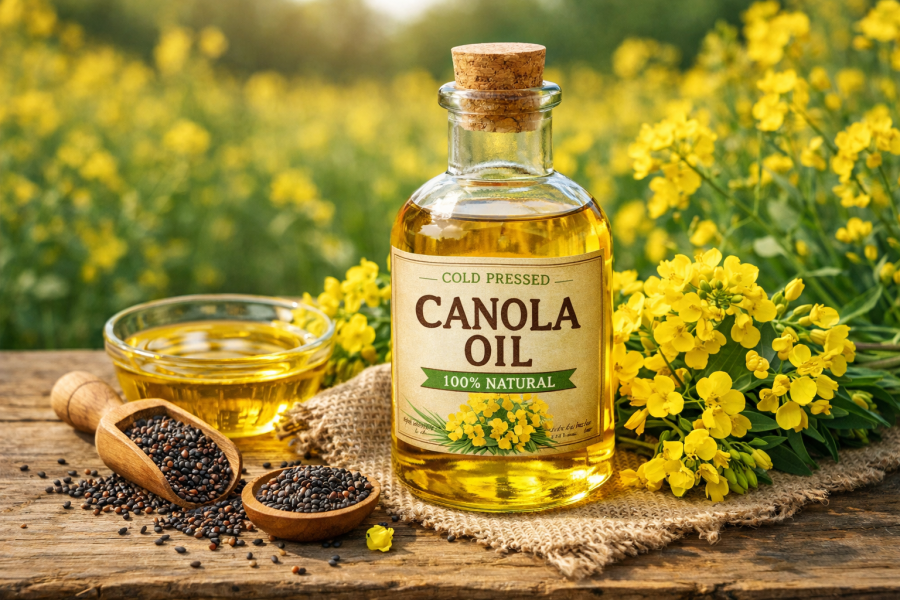
Canola oil is the one that has a stable contribution in home kitchens and food businesses. It facilitates everyday cooking, frying small amounts, and big food. Among the existing alternatives, cold pressed canola oil tends to attract the preference since it operates on a simpler extraction process. It has been compared by many people to refined oil, but they are not sure between the two. This article describes the production of the two oils, their behaviors when cooking, and what distinguishes them, and these are done in simple language that assists the reader in making a well-informed choice without feeling confused. In this article, we will explain how both oils are made, how they work in cooking, and how they are different from each other.
In cold pressing, the physical force is used to press the canola seeds and extract oil. The process does not require the use of high heat and uses no chemical agents. Seeds move through slow-moving equipment that presses out the oil in a controlled way. Since the temperature stays low, the oil keeps more of its natural look and light seed aroma.
This method places value on careful handling rather than speed. The oil often appears slightly darker and feels fuller in texture. Its flavor is mild, but more eminent than the refined oil.
Refined canola is extracted and goes through a series of processes. These are done by heating, purification, and washing to remove odor, color, and natural residues. The outcome is an oily product that has no intense smell or flavor.
This type of processing increases stability and increases shelf life. Refined oil is easy to use with high cooking temperatures and can be used in deep frying and preparing large quantities of food.
Extraction method: It is pure pressure that is used to make the cold-pressed oil. Refined oil is exposed to heat and a further cleaning process.
Taste: Refined oil in oil has no flavor, thus it will not influence food flavor.
Look: Cold-pressed oil appears slightly darker. Refined oil looks clear and light.
Cooking heat: Refined oil works well for high-heat cooking. Cold-pressed oil suits low to medium heat.
Shelf life: Refined oil has the capacity to remain for a longer period due to extra processing.
Choosing the right oil depends on how the kitchen works. Cold-pressed oil fits well in light cooking, pan use, and food where natural taste matters. Refined oil supports long cooking hours, bulk food production, and repeated heating.
In many food supply setups, cold pressed canola oil finds use where simple processing and stable quality matter more than high-heat tolerance. The refined oil is still the viable option in busy kitchens that need oil with a high shelf life and a consistent appearance of the outcome with each batch.
Both oils fulfill various requirements, and each of them has a distinct purpose of use in food. Cold pressed canola oil is recommended to consumers who want a refined product of the process and more of a connection with the original seed, whereas refined oil can be used in high-heat cooking and long storage. These differences facilitate making decisions correctly by preventing misunderstandings. To companies that regard consistent quality, transparent sourcing, and reliable supply criteria, we at souaregroup.com present a secure course of action.
Rating & Reviews for
Understanding Cold Pressed Canola Oil and How It Is Different from Refined Oil


